

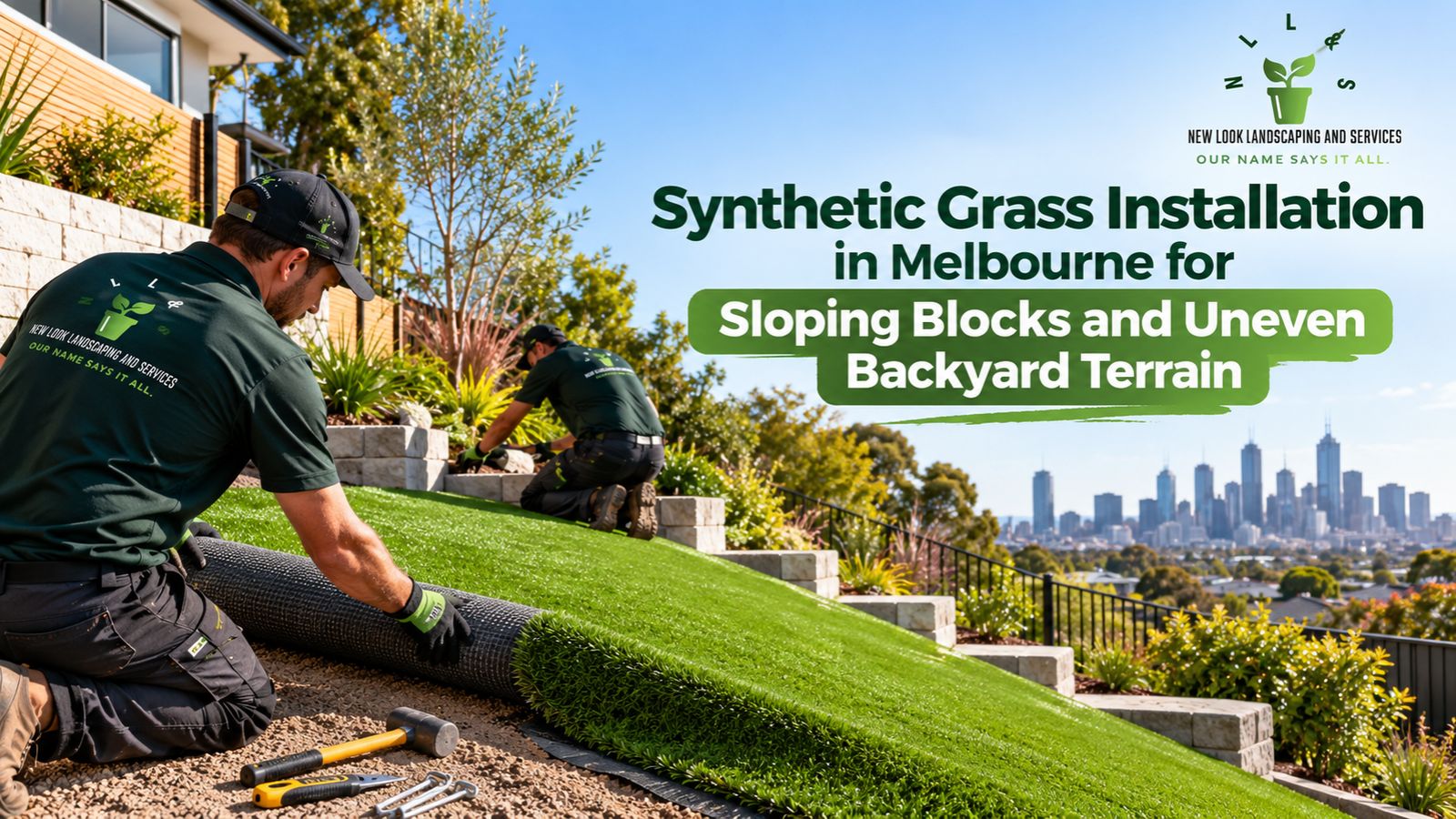
A sloping backyard can be attractive, but maintaining natural grass on uneven ground is not always easy. Water may run downhill instead of soaking into the soil, mowing can become difficult, and certain areas may develop bare patches after heavy rain. For Melbourne homeowners dealing with these challenges, synthetic grass can offer a practical way to create a neater outdoor space when the ground is prepared correctly.
However, installing artificial grass on a slope requires more planning than covering a flat lawn. The angle of the ground, soil conditions, drainage, edging and stability of the base all influence how well the finished surface performs.
Synthetic Grass Installation is not simply about rolling out artificial turf and securing its edges. On sloping blocks, the preparation beneath the grass is just as important as the product itself. Without a suitable foundation, the surface may develop wrinkles, uneven areas or drainage problems over time.
For homeowners considering synthetic grass installation in Melbourne, understanding these challenges before work begins can help them make informed decisions about their property.
New Look Landscaping & Service recognises the importance of planning outdoor surfaces around the actual conditions of a property. This guide explains how synthetic grass can be installed on sloping and uneven backyards, what preparation may be required, and which common mistakes homeowners should avoid.
A flat lawn and a sloping lawn do not behave in the same way. On flat ground, the installation team can generally prepare a consistent base across the area. On a slope, gravity affects water movement, loose materials and the stability of the finished surface.
These differences need to be considered before installation starts.
Rainwater naturally travels downhill. If the soil is compacted or the surface has poor drainage, water can collect at the bottom of the slope or flow towards a house, garage or neighbouring property.
Synthetic grass does not automatically solve these problems. Although many artificial grass products allow water to pass through their backing, the water still needs somewhere suitable to go once it reaches the underlying base.
For example, a backyard that slopes towards a patio may need a carefully planned drainage arrangement before the grass is installed. Simply covering the existing ground could leave the original drainage problem unresolved.
Sloping ground can be more vulnerable to erosion, especially where the soil is loose or exposed to heavy rainfall. If the ground beneath the artificial turf shifts, the surface above it may become uneven.
The installation plan should account for the soil type, slope severity and condition of the existing ground. Where necessary, additional ground preparation, stronger edge restraints or professionally designed retaining measures may be required.
Maintaining natural grass on an incline can be inconvenient. Mowing may be awkward, and some areas can become difficult to reach safely. Watering, fertilising and repairing worn patches can also require repeated attention.
For homeowners seeking a low-maintenance lawn replacement in Melbourne, synthetic grass may reduce routine lawn care. However, the underlying surface must still be designed and installed properly to avoid ongoing repair work.
Before selecting artificial grass, the first step is to understand the existing ground conditions. Not every uneven backyard needs the same preparation method.
A gentle slope may only require reshaping and compacting the existing ground. A steep incline, on the other hand, may need a more involved design to prevent movement.
The gradient can be assessed by measuring the change in height over a horizontal distance. For instance, a backyard that rises or falls by 300 mm over a horizontal distance of 5 metres has a gradient of approximately 6%.
This measurement provides a useful starting point, but it does not determine the installation method by itself. Soil stability, water flow, access and the length of the slope also matter.
Where the slope is steep or the consequences of ground movement could be serious, an appropriate site assessment should be completed before deciding how to proceed.
Uneven ground often contains small depressions, raised sections and compacted areas. These imperfections may become more noticeable once the grass is installed.
A site inspection should identify:
The objective is to create a stable, consistently prepared surface rather than simply hide the existing imperfections.
Melbourne properties can have different soil conditions, and the preparation required depends on the actual site.
Clay-rich soil may drain slowly, particularly when compacted. Sandy or loose soil may need additional attention to achieve a stable base. Previously disturbed ground can also settle unevenly if it has not been adequately compacted.
These conditions should be assessed before choosing the base materials and preparation method.
Base preparation is one of the most important stages of synthetic grass installation in Melbourne. The quality of the finished lawn depends heavily on what sits underneath it.
The preparation process may involve removing existing grass, weeds, loose organic matter, stones and unstable soil. The depth of excavation depends on the condition of the ground, the selected turf system and the required finished height.
Removing organic material is particularly important because it can decompose and leave voids beneath the surface.
Existing paving, irrigation lines or underground services may also influence the excavation plan. These should be identified before digging begins.
Once unsuitable material has been removed, the ground can be reshaped to create a more consistent profile.
On a gently sloping backyard, this may involve smoothing the surface while retaining the overall gradient. On a more uneven site, it may be necessary to cut down raised areas and fill lower sections with appropriate material.
The goal is not necessarily to make the entire backyard flat. A carefully managed slope can help direct water towards a suitable drainage area and preserve the natural layout of the property.
Significant changes to ground levels should be assessed carefully, particularly where they could affect retaining walls, neighbouring land or existing structures.
A suitable aggregate base provides support beneath the artificial grass. The material and depth should be selected according to the ground conditions, intended use and installation system.
The base generally needs to be placed in manageable layers and compacted appropriately. This helps reduce the risk of settlement and creates a more uniform surface.
Compaction should be consistent across the installation area. If some sections are firm while others remain loose, the finished lawn may develop dips or raised areas as the ground settles.
On sloping ground, the base must also remain stable under gravity. Where the gradient or soil conditions make this difficult, additional restraint or a different construction approach may be necessary.
Yes, fake grass can be suitable for some sloping backyards, but the feasibility depends on the gradient, ground stability, drainage requirements and proposed installation system.
A gentle incline is usually easier to prepare than a steep bank. As the gradient increases, keeping the base materials and turf securely in position becomes more important.
On a slope, gravity can encourage the turf to creep downhill if it is not secured adequately. The installation design should account for the direction of the slope, the condition of the edges and the manufacturer’s recommendations.
Depending on the site, suitable measures may include:
The exact fixing method should be selected for the specific product and ground conditions. Not every fixing system is suitable for every soil type or slope.
Adhesives, pins or other fixings should not be treated as a substitute for a properly prepared foundation.
Some steep backyards may be more practical to manage as a series of smaller, level sections rather than one continuous incline.
Terracing can divide a large slope into more manageable areas and create opportunities for garden beds, pathways or seating areas. However, it involves additional design and construction considerations.
Retaining walls must be suitable for the height, soil pressure and drainage conditions involved. Depending on the proposed work, professional engineering advice or permits may be required.
For homeowners considering artificial turf installation services in Melbourne, the decision between retaining the existing slope and creating terraces should be based on the property’s layout, intended use and overall construction requirements.
Drainage deserves particular attention when installing synthetic grass on a sloping block. A surface that looks excellent in dry weather may perform poorly during heavy rainfall if water movement has not been considered.
The finished ground levels should avoid directing water towards the house, garage or other structures. Water should have a suitable path to an approved drainage point without creating problems elsewhere on the property.
This is especially important where a backyard slopes towards a building or a low-lying courtyard.
Artificial grass backing may contain drainage holes, but those openings are only one part of the system.
Water must also pass through the prepared base and into suitable underlying ground or a designed drainage system. If the soil beneath the base is relatively impermeable, water may accumulate even when the turf itself allows water through.
Where site conditions warrant it, drainage channels, suitable drainage aggregate or other engineered solutions may be needed.
Changing the ground profile can alter where rainwater travels. Filling a depression or raising one section of the lawn may redirect water towards a neighbouring property or an existing structure.
Before installation, consider where the water currently flows and where it will go after the surface is changed. Drainage solutions should comply with applicable requirements and should not transfer runoff problems to neighbouring land.
Every property presents its own combination of space, access and ground conditions. The following examples illustrate how the installation approach may differ.
Imagine a backyard that falls gradually from the house towards a rear fence. The existing lawn is patchy, and mowing becomes inconvenient after rain.
If the ground is stable and the drainage is suitable, the preparation may involve removing the old lawn, correcting minor depressions, installing a compacted base and securing the turf around the perimeter.
The existing slope may be retained rather than levelled. This can reduce unnecessary excavation while preserving the natural layout.
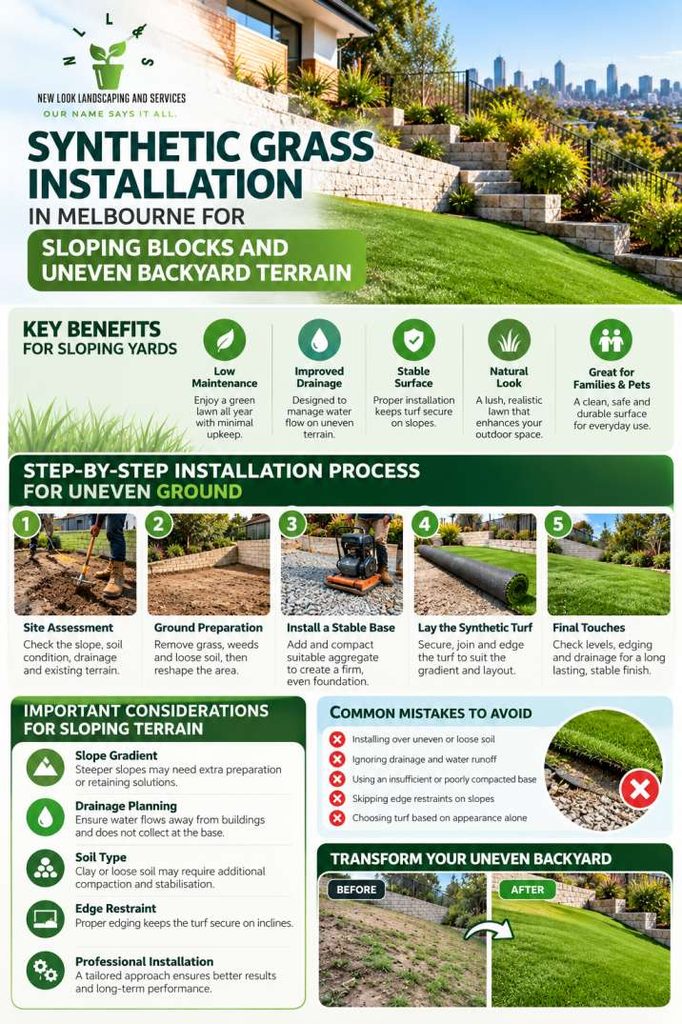
Consider a property with a narrow, steep section between a garden bed and a lower entertaining area.
Installing turf directly over the existing soil could lead to movement, especially if the ground is loose. The site may require more extensive preparation, stronger restraint or a redesigned layout.
Depending on the gradient and intended use, terracing or retaining measures may provide a more suitable solution.
The correct choice should follow a site assessment rather than relying on a standard installation method.
A homeowner may have a backyard with shallow depressions that remain wet after rain. The ground may also feel hard and compacted during dry weather.
In this situation, simply smoothing the surface and laying turf would not necessarily address the underlying issue. The soil’s drainage characteristics and the proposed base need to be assessed first.
Correcting the levels and establishing a suitable drainage arrangement may be necessary before the grass is installed.
These examples show why synthetic grass installation for homes should be planned around actual site conditions instead of using the same preparation process for every backyard.
Even a good-quality artificial grass product can perform poorly if the installation is not suited to the site.
Laying turf over bumps, depressions or loose ground can leave the finished surface looking inconsistent. Some imperfections may become more obvious after foot traffic or changes in ground moisture.
Better approach: Inspect the entire area, correct the ground profile and establish a stable base before laying the turf.
Artificial grass does not eliminate waterlogging caused by unsuitable soil or poor drainage design.
Better approach: Assess how water moves across and beneath the site. Address existing drainage issues before installation.
A base that has not been compacted appropriately may settle after installation. This can create dips, uneven joins and areas where water collects.
Better approach: Use suitable base materials and compact them consistently according to the installation requirements.
Removing large amounts of soil to create a flat lawn can increase excavation costs and introduce additional drainage or retaining requirements.
Better approach: Determine whether the existing gradient can be retained safely. Level only the areas that need adjustment.
Pile height, colour and softness matter, but they are not the only considerations. The product’s backing, drainage characteristics, intended use and compatibility with the installation system also matter.
Better approach: Choose a product that suits the intended use and the conditions of the site, following the manufacturer’s installation guidance.
Poorly secured edges and incorrectly prepared seams can become noticeable, particularly on sloping ground where movement may occur.
Better approach: Plan joins and perimeter restraints before laying the turf, rather than treating them as finishing details.
A successful installation begins with practical decisions made before the first layer of soil is removed.
1. Plan the finished levels first. Consider the height of nearby paths, door thresholds, garden beds and existing paving. This helps avoid awkward transitions and unintended water flow.
2. Treat drainage as part of the design. Do not wait until the turf has been installed to discover where water collects. Check the proposed drainage path during site preparation.
3. Match the base to the ground conditions. Soil type, gradient and intended use should influence the base design. There is no single base specification that suits every Melbourne property.
4. Consider how the space will be used. A decorative garden slope may have different requirements from an area used regularly by children or pets. Foot traffic and access needs should influence the design.
5. Inspect the base before laying the turf. Check for loose sections, depressions and inconsistent levels. Correcting these issues before installation is generally easier than repairing the finished surface.
6. Follow the turf manufacturer’s instructions. Requirements for joining, fixing, drainage and installation can vary between products. The selected system should be installed according to its specifications.
7. Understand the ongoing maintenance requirements. Synthetic grass usually needs less routine care than natural grass, but leaves, dirt and debris still need to be removed. Brushing may also be necessary to maintain the appearance of the fibres.
8. Assess steep or unstable ground professionally. If the slope shows signs of erosion, cracking or movement, determine the cause before covering it. Artificial grass is not a substitute for stabilising an unsafe bank.
Synthetic grass can be a practical option for many Melbourne properties with uneven terrain, but the result depends on the condition of the ground and the quality of the preparation.
For gently sloping lawns, a suitable base, carefully managed levels and secure edging may be sufficient. Steeper or unstable areas can require more substantial work, including drainage improvements, additional restraint or a redesigned landscape.
Homeowners should also consider the limitations. Artificial turf can become hot in direct sunlight, does not remove the need for cleaning, and cannot correct serious soil instability on its own. The finished surface should be selected and designed according to the property’s needs.
When comparing artificial turf installation services in Melbourne, ask what ground preparation is included, how drainage will be managed, how the turf will be secured and whether additional work may be required if unstable soil is discovered.
For a low-maintenance lawn replacement in Melbourne, these details can make a meaningful difference to the suitability and long-term performance of the finished space.
New Look Landscaping & Service can be considered when planning a landscaping project around the specific challenges of an uneven or sloping backyard. The important first step is to understand the existing site conditions and identify a suitable installation approach before work begins.
Installing artificial grass on a sloping or uneven backyard requires more than choosing a suitable turf product. Ground preparation, base stability, drainage, secure edging and careful planning all contribute to the final result.
For homeowners exploring synthetic grass installation in Melbourne, the most useful starting point is a site assessment that identifies the property’s specific challenges. Addressing these issues before installation can help reduce avoidable problems and create an outdoor surface suited to the space.
With a suitable design and properly prepared foundation, Synthetic Grass Installation can help transform an awkward backyard into a more practical and easier-to-maintain outdoor area.
New Look Landscaping & Service encourages homeowners to consider the ground conditions, drainage requirements and intended use of their backyard before choosing an installation approach. A well-planned project begins with understanding the site and selecting a solution that meets its needs.
Yes, synthetic grass can be installed on many sloping backyards. The appropriate method depends on the steepness of the slope, soil stability, drainage and how the area will be used.
Gentle slopes may only need careful reshaping, base preparation and secure edging. Steeper areas may require additional restraint or terracing. An assessment of the site helps determine whether the existing gradient can be retained safely.
Uneven ground usually needs more preparation than a flat, stable surface. The installer may need to remove unsuitable soil, correct high and low spots, and establish a properly compacted base.
The appropriate materials and base depth depend on the existing soil, drainage conditions, slope and selected turf system. A consistent foundation helps reduce the risk of settlement, wrinkles and uneven patches.
Preventing movement requires a combination of a stable base, suitable perimeter restraints and an appropriate turf-fixing method. The installation system must be compatible with the slope and the underlying ground.
Simply adding more pins or adhesive may not solve the problem if the base itself is unstable. Steeper slopes may require additional measures determined by the site conditions and manufacturer’s guidance.
Synthetic grass does not automatically cause drainage problems, but it will not fix an unsuitable drainage system either. Water must pass through the turf backing and the underlying base, then drain into suitable ground or an appropriate drainage system.
If the soil is poorly permeable or the ground slopes towards a building, drainage improvements may be necessary. The finished levels should direct water appropriately without creating runoff problems for neighbouring properties.
It can be suitable for some steep or uneven backyards, provided the ground can be prepared and stabilised appropriately. The most important considerations are gradient, erosion risk, soil condition, drainage and intended use.
A steep bank with loose soil may need more substantial landscaping work than a gently sloping lawn. Where there are signs of ground movement or significant retaining requirements, the site should be assessed before installation proceeds.
New Look Landscaping and Service precisely love to work among greens and make the surrounding special with artistic features. We are specialised in design concepts, constructions and management for multiple outdoor spaces around Victoria.