

A tired, patchy backyard can make an otherwise attractive Melbourne property feel unfinished. Bare soil, weeds, muddy areas and uneven grass are not just cosmetic problems—they can also make outdoor spaces harder to use and maintain.
That is why instant lawn installation in Melbourne has become a practical option for homeowners who want a usable lawn without waiting months for seed to establish.
Unlike growing a lawn from seed, instant lawn involves laying established turf over a properly prepared surface. The finished lawn can look dramatically different immediately after installation, but the work underneath that new grass is what determines whether it thrives.
Successful Lawn Installation Works are not simply about rolling out turf. Soil preparation, drainage, turf selection, accurate measurements, installation technique, watering and early maintenance all influence the final result.
If you are considering natural turf for your Melbourne property, understanding what happens before, during and after installation can help you make better decisions and avoid common problems.
Instant lawn is established natural grass that has been professionally grown, harvested with its root zone and supplied in rolls or slabs. These sections are transported to the property and installed over prepared soil.
The major advantage is speed.
With traditional seeding, homeowners must wait for germination and establishment. Turf provides an already-developed grass surface, meaning the area can begin transforming visually as soon as the installation is completed.
However, “instant” does not mean maintenance-free.
Freshly installed turf still needs time to establish roots into the underlying soil. During this period, the grass depends heavily on appropriate watering and care.
A useful way to think about the process is:
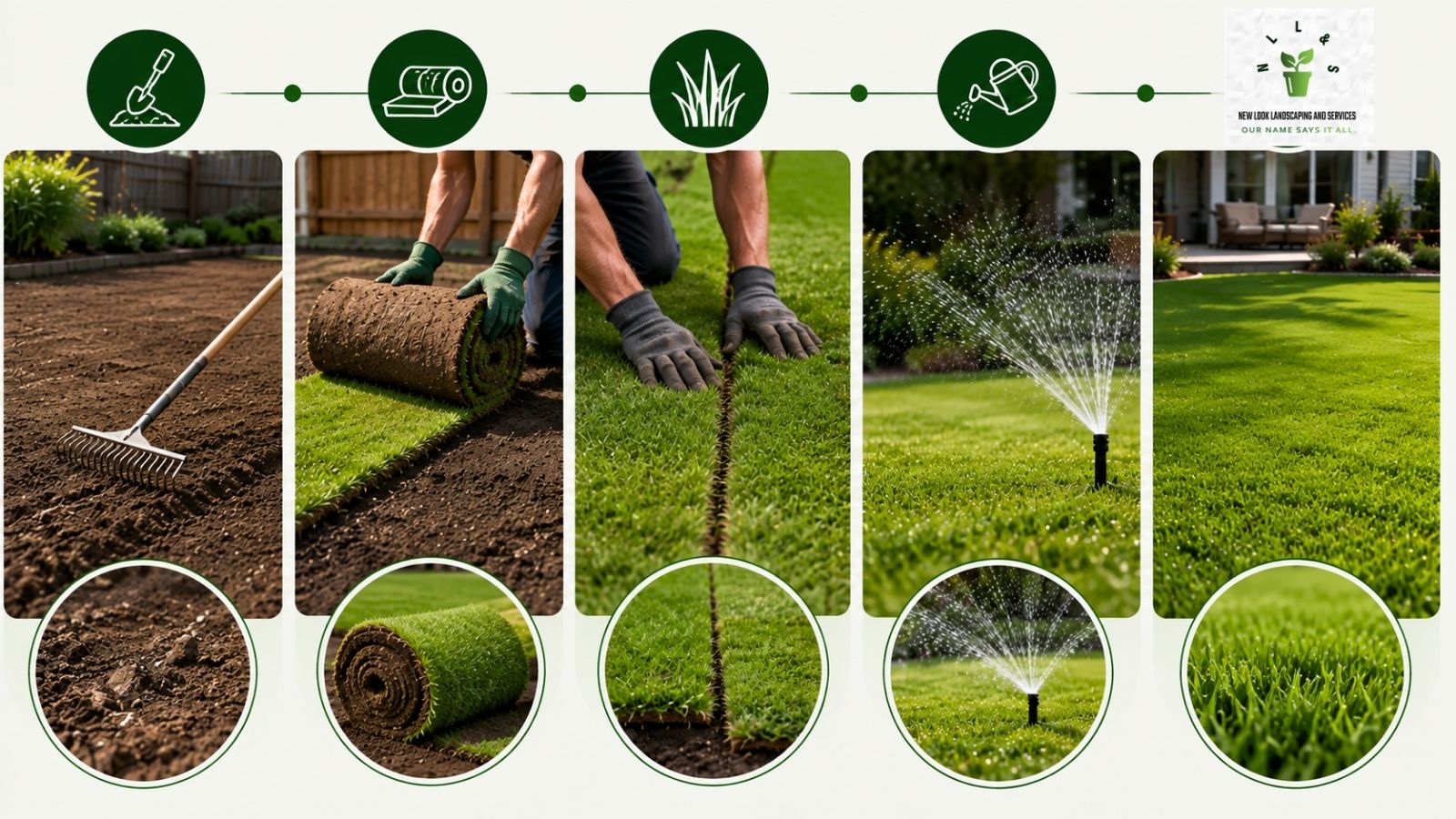
Site assessment → preparation → soil improvement → turf selection → installation → watering → establishment
Every stage contributes to the health and appearance of the finished lawn.
One of the most common misconceptions about instant turf is that the grass itself is the most important part of the job.
In practice, preparation can make or break the installation.
Even high-quality turf can struggle if it is placed over compacted soil, poor drainage, unsuitable grades or an uneven surface.
Before real grass installation, the existing area should be assessed for issues such as:
For example, a lawn installed over heavily compacted soil may initially look excellent. Several weeks later, however, water may begin pooling after rainfall and sections of grass can become stressed.
That is why experienced installers focus on the foundation rather than simply the visible finish.
The first stage is understanding the area where the lawn will be installed.
A site assessment considers the size and shape of the lawn, existing vegetation, soil conditions, drainage, sunlight and access for materials and equipment.
Melbourne properties can vary considerably. A small suburban backyard with established garden beds presents different challenges from a newly landscaped block with compacted construction soil.
The installer also needs to consider how the lawn will be used.
A family lawn exposed to regular foot traffic may require a different turf selection from a mostly decorative garden area.
If the installation area already contains old grass, weeds or unwanted vegetation, these materials may need to be removed.
The objective is to create a clean, workable base.
Simply placing new turf over existing weeds can create problems later. Persistent weeds may compete with the new lawn for water and nutrients, while old vegetation can create an uneven base.
Where appropriate, existing material is removed and the surface is cleared before soil preparation begins.
This is one of the most important stages of the entire process.
The soil needs to provide a stable environment where new turf roots can establish.
Preparation may involve:
The finished surface should generally have enough fall to move excess water away rather than allowing it to remain around the grass roots.
A lawn that is perfectly flat visually may not be ideal from a drainage perspective.
Roots need access to air, water and nutrients. Extremely compacted soil restricts pore space and can make root establishment difficult.
This is particularly relevant around recently constructed homes, where heavy machinery and construction activity can compress the soil.
Good preparation helps create a more suitable root zone before the turf arrives.
Not every natural grass variety performs equally well in every Melbourne garden.
The selection should consider:
Some grasses perform better in sunny locations, while others have greater tolerance for shade.
This is why choosing turf based purely on appearance can be a mistake.
A grass variety that looks attractive in a supplier’s display may not perform well in a heavily shaded backyard.
An experienced approach is to match the turf to the actual growing conditions of the property.
Accurate measurements are important because natural turf is perishable.
The required amount needs to be calculated carefully, allowing for the shape and layout of the area while avoiding excessive waste.
Ordering too little creates an obvious problem: installation may have to pause while additional turf is sourced.
Ordering substantially too much can create unnecessary expense and leave excess material that needs to be dealt with quickly.
The timing of delivery also matters. Turf should generally be installed promptly after harvesting and delivery rather than being left rolled up for extended periods.
Once the soil is prepared and the turf arrives, installation can begin.
The rolls or slabs are positioned closely together across the prepared surface.
A good installation aims for:
Staggering joins between rows, much like brickwork, can help reduce the appearance of continuous seams.
Care is especially important around garden edges, pathways, trees and irregularly shaped areas.
Fresh turf needs close contact with the prepared soil.
Air pockets underneath turf can interfere with root establishment and create areas where the grass dries out faster.
The turf should sit firmly against the soil surface without being excessively compressed.
After installation, the lawn may be gently rolled or otherwise settled depending on the site and installation method.
The objective is to create a stable connection between the turf’s root layer and the prepared growing medium.
Many homeowners focus heavily on installation day and underestimate what happens during the following weeks.
This establishment period is critical.
Fresh turf needs sufficient moisture while its roots establish.
The exact watering requirements depend on weather, turf type, soil and drainage, so there is no single schedule that works for every Melbourne property.
During warm or windy conditions, newly laid turf can dry rapidly.
The goal is to keep the root zone appropriately moist without creating prolonged waterlogging.
Lift a corner of the turf carefully to check whether the soil underneath is receiving adequate moisture rather than relying entirely on the surface appearance.
A newly installed lawn may look ready for use, but the root system needs time to establish.
Avoid unnecessary foot traffic during the early establishment period, particularly when the soil is wet.
Children, pets and outdoor furniture can create concentrated pressure that disturbs the turf before it has properly rooted.
Once establishment progresses, normal use can gradually resume according to the condition of the lawn.
Newly installed grass should not automatically be mowed immediately.
The timing of the first mow depends on growth, root establishment and turf condition.
When mowing begins, avoid removing excessive leaf material in a single cut. Keeping the mower blades sharp and using an appropriate cutting height can reduce unnecessary stress.
Understanding common failure points can help homeowners recognize why professional preparation matters.
Excess water can cause root problems, weaken grass and contribute to disease.
If the site already has drainage issues, installing turf without addressing them simply hides the problem temporarily.
Small gaps can dry out quickly and become visually obvious as the lawn establishes.
Turf should be placed carefully so joins are close without excessive overlapping.
New grass cannot compensate indefinitely for an unsuitable growing environment.
If the soil is compacted, contaminated with construction waste or otherwise unsuitable, preparation should address those conditions before installation.
A shade-intolerant grass installed beneath dense tree cover is unlikely to perform as well as the same turf in an open, sunny yard.
Grass selection should reflect the environment rather than simply personal preference.
Fresh turf has greater immediate water requirements than an established lawn.
Failing to provide enough moisture during hot or dry weather can cause sections to brown before roots have established.
The opposite problem can also occur.
Constantly saturated soil can restrict oxygen around roots and contribute to poor establishment.
The objective is consistent, appropriate moisture, not simply maximum water.
Melbourne’s changing weather means lawn care should be responsive rather than based entirely on a fixed calendar.
Before installation, consider where the lawn sits relative to:
Turf can be installed during different periods, but weather conditions influence how quickly it establishes and how much aftercare it needs.
Very hot or dry conditions can increase watering demands. Cooler periods may slow growth and establishment.
Rather than choosing an installation date based solely on convenience, consider the expected conditions during the first few weeks.
One practical mistake is installing the lawn and only then thinking about watering.
If irrigation is required, the system should be planned and tested before or during preparation.
Check that water reaches the entire lawn rather than leaving dry corners or excessively wet zones.
The new lawn should transition sensibly into paths, paving, garden edging and other surfaces.
If the soil level is prepared too high or too low, the finished result can create drainage, mowing or trip-related problems.
Experienced Lawn Installation Works account for these transitions before the turf is laid.
For homeowners who want a faster visual transformation, turf has a major advantage over seeding.
Advantages:
Considerations:
Advantages:
Considerations:
The better option depends on the property, budget, timeframe and intended use.
Some small lawn areas can be prepared and turfed by capable homeowners. However, larger or complicated sites can involve considerably more work than simply laying grass.
Professional assistance may be particularly useful when the property has:
The value of experienced natural grass installation services in Melbourne is often in the preparation and problem-solving rather than simply laying the turf.
An experienced installer can identify potential issues before they become expensive failures.
Understanding how to install natural grass reveals an important point: the visible turf is only one part of a successful lawn.
The preparation beneath it, the suitability of the grass variety, drainage, installation technique and aftercare all contribute to long-term performance.
For Melbourne homeowners considering instant lawn installation Melbourne, the best results come from treating the project as a complete growing system rather than a quick cosmetic upgrade.
Good Lawn Installation Works start before the first roll of turf is placed. They begin with assessing the site, preparing the soil and selecting grass that suits the property’s conditions. After installation, careful watering and sensible use give the new lawn the opportunity to establish properly.
If you’re planning a new lawn, New Look Landscaping & Service can help you approach the project with practical considerations in mind—from site preparation and turf selection through to installation and establishment. The objective should always be a lawn that not only looks good on installation day but continues to perform well as it becomes part of your outdoor living space.
Establishment time varies according to turf variety, weather, soil conditions, watering and sunlight. Fresh turf can look finished immediately, but that does not mean the roots have fully established.
The early weeks are particularly important. Appropriate watering, limited traffic and suitable mowing practices help encourage the roots to connect with the underlying soil.
A lawn should be judged by its root establishment and overall health rather than simply how green it looks on installation day.
It is generally not advisable to simply lay new turf directly over existing grass.
Old grass, weeds, uneven ground and compacted soil can interfere with the new turf’s ability to establish. Proper preparation normally involves clearing unwanted vegetation and creating a suitable, level growing surface.
There can be exceptions depending on the specific site, but a professional assessment is preferable when existing lawn conditions are complicated.
There is no universal watering schedule because Melbourne weather, turf type, soil and drainage all influence moisture requirements.
The newly installed root zone should remain appropriately moist while establishment occurs. During hot or windy conditions, more frequent attention may be required.
Rather than following a rigid schedule regardless of conditions, check the moisture of the underlying soil and adjust watering accordingly.
Try to minimize unnecessary traffic while the turf is establishing.
Light access may eventually be necessary, but repeated walking, pets running across the lawn or placing heavy objects on fresh turf can disturb joins and compress the soil.
Waiting until the turf has begun to root firmly provides a better foundation for regular use.
It depends on the size and complexity of the project and your experience with soil preparation.
For a small, straightforward area, an experienced homeowner may be able to complete much of the work themselves. Larger areas, drainage issues, slopes and complicated levels can make preparation substantially more demanding.
Professional real grass installation can provide value when accurate preparation, turf selection, efficient installation and early establishment are important priorities.
New Look Landscaping and Service precisely love to work among greens and make the surrounding special with artistic features. We are specialised in design concepts, constructions and management for multiple outdoor spaces around Victoria.