

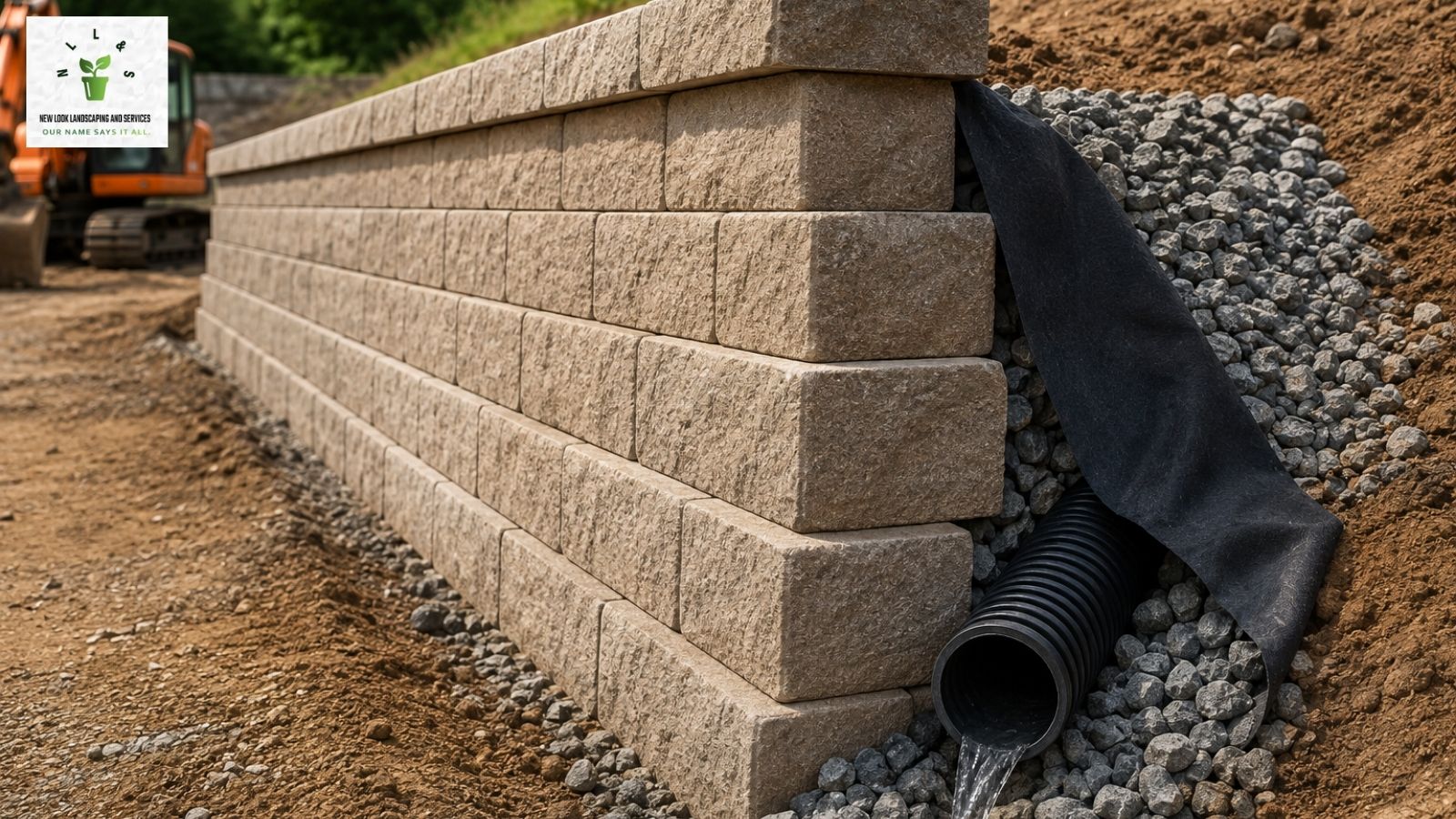
A retaining wall may look structurally sound from the outside, yet water trapped behind it can quietly undermine its performance. Poor drainage is one of the most common causes of retaining wall movement, cracking, leaning and premature failure. Understanding drainage behind retaining walls is therefore essential for anyone planning a new wall or assessing an existing one. Proper drainage does more than move water away from the structure—it reduces hydrostatic pressure, protects backfill and supports Retaining Wall Longevity. In Melbourne’s variable weather conditions, getting the drainage design right from the beginning can make a significant difference to long-term performance.
Retaining walls are designed to resist the lateral pressure created by the soil they hold back. What is sometimes overlooked is that saturated soil behaves differently from relatively dry, well-drained backfill. When rainwater accumulates behind a wall, it increases the weight of the soil and can create hydrostatic pressure against the wall face.
Unlike soil pressure, which is generally accounted for during structural design, uncontrolled water pressure can become a major additional load when drainage has not been properly considered.
This is particularly important after periods of heavy rainfall. Water can enter the retained soil from rainfall, surface runoff, irrigation, leaking pipes or poor site drainage. If it cannot escape efficiently, the pressure gradually builds. Over time, this can contribute to:
The important point is that a drainage problem is not necessarily visible when it begins. A wall may appear perfectly stable while water is accumulating behind it.
Effective drainage behind retaining walls is not simply a matter of placing a pipe somewhere behind the structure. The drainage system needs to work as a complete assembly, allowing water to enter the drainage zone, travel towards an appropriate outlet and leave the site without carrying excessive soil particles with it.
A commonly used drainage arrangement incorporates a free-draining aggregate zone behind the wall, a perforated agricultural drainage pipe at the appropriate level and a suitable discharge point. Geotextile material may also be used to separate soil from drainage aggregate and reduce the movement of fine particles into the drainage system.
A perforated agricultural drain, often referred to as an ag pipe, provides a pathway for water collected within the drainage layer. The pipe should be installed with appropriate fall so that collected water can move towards a lawful and suitable discharge location.
The pipe itself is only one component of the system. If it is surrounded by unsuitable material, installed without adequate fall or discharged incorrectly, simply having an ag pipe behind the wall does not guarantee effective drainage.
Experienced installers consider the surrounding aggregate, pipe location, outlet, access and potential maintenance requirements as part of the overall design.
Free-draining aggregate helps water move through the area immediately behind the retaining wall rather than remaining trapped within compacted soil. The aggregate should be appropriate for the drainage application and installed consistently enough to create a reliable drainage zone.
Fine soil can migrate into poorly protected drainage layers and eventually reduce their effectiveness. This is one reason geotextile separation is often considered where site conditions require it. The objective is to allow water through while limiting the migration of soil fines.
Good retaining wall installation begins with understanding the site rather than selecting blocks or finishes first. Before construction starts, an experienced installer should consider where water currently flows, where it is likely to collect and how rainfall will interact with the proposed wall.
The slope behind the wall is particularly important. A wall positioned below a sloping garden, driveway or neighbouring property may receive substantially more runoff than a wall on relatively level ground.
A practical site assessment should consider:
These factors help determine what type of drainage arrangement may be appropriate.
For example, a wall supporting a garden bed may face different water conditions from one retaining soil below a sloping driveway. Treating both situations identically can create unnecessary risks.
A concrete retaining wall can provide substantial structural strength, but strength alone does not eliminate the need for drainage. Concrete is capable of resisting significant loads, but a wall still needs to be designed for the forces expected at its location.
Drainage becomes especially important where a wall is supporting a considerable volume of soil. If water becomes trapped behind the structure, the resulting pressure can act continuously against the wall rather than only during isolated rainfall events.
Concrete retaining wall blocks are commonly used in landscaping because they can create practical and visually adaptable retaining structures. However, the blocks are only part of the finished system.
Behind a block wall, the drainage zone, backfill material, reinforcement where required and surface water management all contribute to overall performance. Depending on the wall system and site conditions, reinforcement may be required to provide additional stability.
A common misconception is that filling the area immediately behind blocks with ordinary garden soil is sufficient. In many applications, that approach can retain excessive moisture and increase pressure. The backfill specification should instead be determined according to the wall system, site conditions and engineering requirements.
When comparing retaining wall contractors, homeowners sometimes focus primarily on appearance, material selection and quoted construction cost. Those factors matter, but drainage deserves equal attention because it can determine how the finished structure behaves over time.
An experienced contractor should be able to explain where water will go, what drainage components will be used and how the system will discharge.
Before approving a retaining wall project, ask:
A contractor who can clearly explain these details demonstrates a stronger understanding of the relationship between drainage and wall performance.
Retaining Wall Longevity is influenced by several interconnected factors. Drainage is critical, but it works alongside structural design, foundation preparation, material quality, backfill selection, construction technique and ongoing site maintenance.
A beautifully finished wall can still develop problems if its foundation is inadequate or if water is consistently directed towards it. Similarly, an appropriately designed drainage system can be compromised if construction debris blocks the pipe or if landscaping work later changes the natural flow of water.
This is why retaining walls should be viewed as engineered landscape structures rather than simply decorative garden features.
The base of a retaining wall needs to provide appropriate support for the structure. Excavation, foundation preparation and levelling should be carried out according to the requirements of the selected wall system and site.
Water can create additional problems around the base if it is allowed to accumulate or erode supporting material. Surface drainage should therefore work with the wall’s subsurface drainage rather than against it.
Some retaining wall failures are linked to avoidable construction or maintenance mistakes. Understanding these issues can help homeowners identify potential problems before they become expensive repairs.
A pipe that collects water but has nowhere suitable to discharge it cannot perform its intended function. The outlet needs to be considered before installation rather than treated as an afterthought.
Garden soil and other fine-grained materials can retain water. Depending on the design, placing these materials directly against the rear of a wall may increase moisture retention and pressure.
Small amounts of soil, concrete residue or other debris can enter drainage systems during construction. Protecting drainage components during backfilling and completing the installation carefully helps preserve their function.
Subsurface drainage cannot compensate indefinitely for poor surface-water management. Downpipes, paving, garden beds and irrigation should be arranged so that unnecessary volumes of water are not directed towards the retaining structure.
Garden irrigation can contribute significant moisture to retained soil, particularly when systems operate frequently. Sprinklers should be positioned thoughtfully, while leaking irrigation lines should be repaired promptly.
Homeowners should periodically inspect retaining walls for changes such as:
Early investigation is usually more practical than waiting until movement becomes obvious.
Landscaping improvements can unintentionally obstruct drainage outlets. Mulch, soil, paving, plants and decorative materials should not be placed in a way that prevents water from leaving the system.
Not every retaining wall showing a small crack requires complete replacement. The cause, extent and location of the problem need to be assessed before deciding what action is appropriate.
For example, a minor cosmetic crack may have a very different cause from a wall that is visibly leaning with saturated soil behind it. Similarly, water appearing through joints may indicate that drainage is functioning rather than failing—but persistent uncontrolled water flow may require further investigation.
Where there is significant movement, structural cracking, erosion or uncertainty about stability, professional assessment is advisable. Attempting to excavate behind a moving wall without understanding the loads involved can make the situation considerably more dangerous.
For homeowners considering retaining wall construction services in Melbourne, drainage should be discussed during the planning stage, not once the wall is already under construction. Melbourne properties can have varied soil profiles, slopes, established gardens and existing drainage infrastructure, so a solution that works on one site may not be appropriate on another.
The right approach is site-specific. Wall type, height, retained load, soil characteristics, drainage requirements and applicable construction considerations all need to be evaluated together. Depending on the project, engineering input or relevant approvals may also be necessary.
Once construction is complete, homeowners can take several simple steps to protect the drainage system and wall structure. Check visible drainage outlets periodically, particularly after heavy rainfall. Look for blocked openings, unusual water discharge, soil erosion or new damp areas.
Keep gutters and downpipes functioning correctly so roof water does not unnecessarily saturate the area behind the wall. Inspect irrigation lines for leaks and avoid making major changes to ground levels without considering how those changes will affect runoff.
If the wall begins to lean, bulge or develop significant cracks, do not assume the problem will correct itself. Movement can indicate a structural or drainage issue that requires proper assessment.
The most reliable retaining walls are designed with water management in mind from the beginning. Good drainage reduces hydrostatic pressure, protects the backfill and helps the wall perform as intended through changing weather conditions. Whether the project involves concrete blocks, masonry or another retaining system, the drainage strategy should match the site’s slope, soil, water flow and structural requirements.
For homeowners planning a new wall or concerned about an existing structure, New Look Landscaping & Service can help assess the practical landscaping considerations involved in drainage and retaining wall projects. The key is to address water management before construction problems develop rather than treating drainage as a repair after the wall begins to move.
Ultimately, Retaining Wall Longevity comes from getting the fundamentals right: appropriate design, stable foundations, suitable materials, controlled surface runoff and properly planned drainage. Investing attention in these elements during construction can help protect the structure and surrounding landscape for many years, while also reducing the likelihood of avoidable maintenance and costly remedial work.
Drainage helps remove water from the soil retained by the wall and reduces hydrostatic pressure. Without an effective drainage pathway, rainfall, irrigation or groundwater can accumulate behind the structure. Saturated soil becomes heavier and water pressure can act against the wall. Over time, this may contribute to movement, cracking, leaning and failure. Drainage is therefore a fundamental part of a properly considered retaining wall system, rather than an optional finishing feature.
The appropriate drainage arrangement depends on the wall design, site conditions, soil, groundwater, wall height and expected water flow. Many retaining wall systems incorporate a perforated agricultural drain within a free-draining zone, but the exact configuration should be determined according to the specific project. Simply installing an ag pipe without considering its fall, surrounding aggregate and discharge point does not automatically create an effective drainage system.
Yes. A concrete retaining wall can be structurally strong while still being exposed to excessive water pressure if drainage has not been properly addressed. Persistent saturation can increase lateral loading and may also contribute to erosion or changes in the supporting ground. The wall’s structural design, foundation and reinforcement remain important, but drainage should be treated as an integral part of the overall system rather than as a separate landscaping detail.
Warning signs can include persistent water pooling, unusually wet soil, water escaping through unexpected areas, soil being washed from joints, blocked outlets, new cracking, bulging or visible wall movement. However, visible symptoms do not always reveal the actual cause. A wall may also have hidden drainage problems without obvious external signs. If movement or significant cracking is present, it is better to have the structure assessed rather than attempting to excavate behind it yourself.
Effective drainage helps control the amount of water retained behind the structure and reduces hydrostatic pressure. It also helps protect backfill from excessive saturation and reduces the likelihood of water-related erosion. When combined with suitable foundations, appropriate structural design, correct backfill and good surface-water management, drainage supports Retaining Wall Longevity by reducing one of the major sources of stress on a retaining structure. Regular inspection also helps identify drainage issues before they become major repairs.
New Look Landscaping and Service precisely love to work among greens and make the surrounding special with artistic features. We are specialised in design concepts, constructions and management for multiple outdoor spaces around Victoria.