

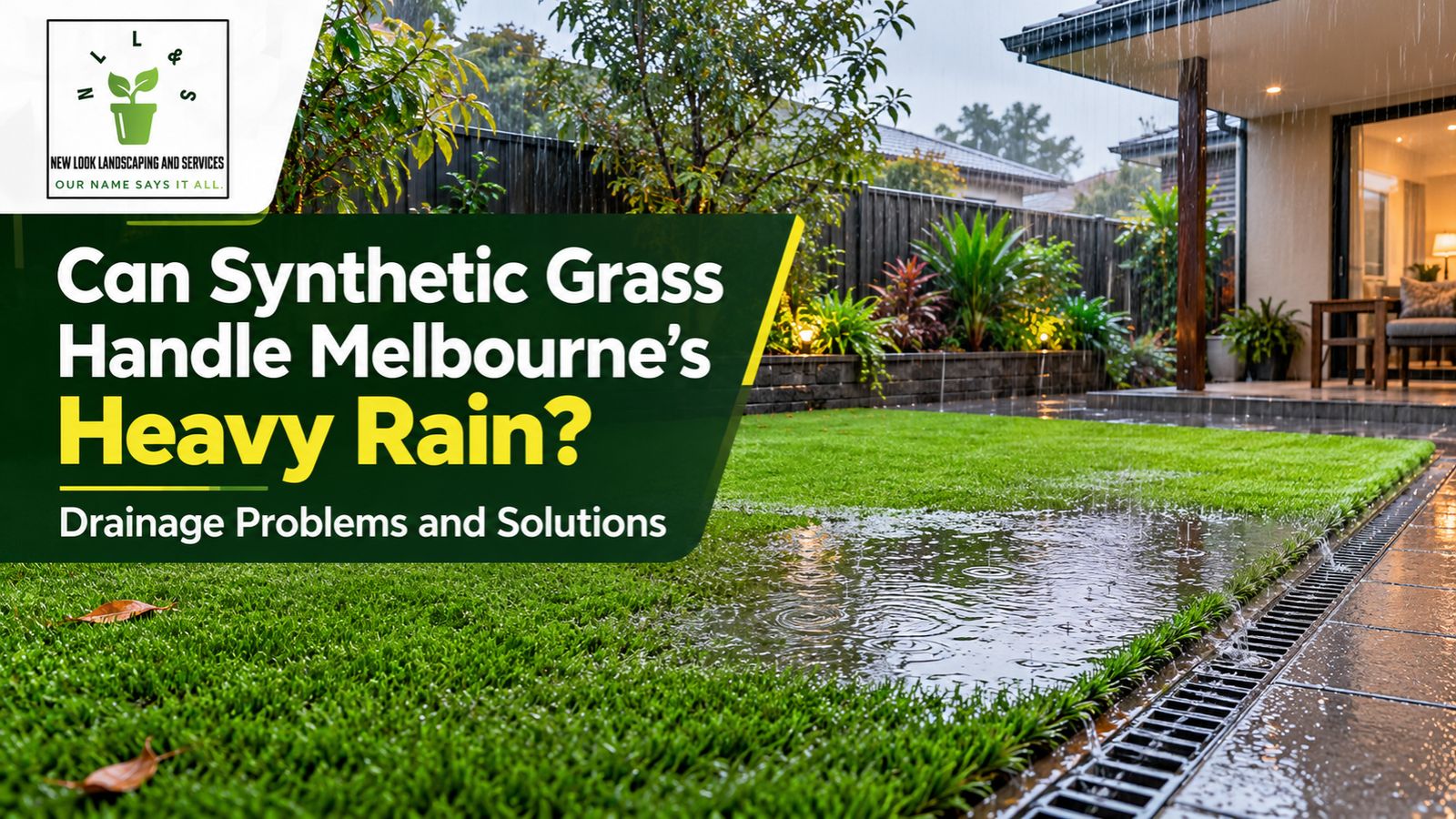
Melbourne’s weather can change quickly, bringing heavy rain that leaves gardens, backyards and outdoor areas wet for hours. If your lawn regularly becomes muddy or waterlogged, synthetic grass may seem like a practical alternative to natural turf. However, artificial grass does not automatically solve drainage problems. Its performance depends on the quality of the installation, the preparation of the ground and the drainage system beneath it.
A well-installed synthetic lawn can provide a neat, usable outdoor space with less routine maintenance than natural grass. Poor preparation, however, can lead to standing water, unpleasant odours and an uneven surface.
Understanding how synthetic grass installation in Melbourne works in wet conditions can help you make informed decisions before replacing your existing lawn.
Yes, synthetic grass can handle heavy rainfall when it has been installed with suitable drainage and a properly prepared base. The grass fibres themselves are not the main factor that determines how quickly rainwater disappears. Water must also pass through the backing, move through the underlying materials and drain away from the area.
A successful installation considers the existing soil, ground slope, rainfall exposure and intended use of the lawn.
For example, a small backyard with compacted clay soil may need a different preparation approach from a garden with naturally free-draining soil. Similarly, a lawn used by pets or children needs careful planning to manage regular use and moisture.
Before installing synthetic turf, it is important to identify why the existing lawn becomes waterlogged. Replacing natural grass without addressing the underlying drainage problem may simply transfer the same issue to the new surface.
Drainage issues can develop when one or more parts of the installation are unsuitable for the site. Recognising these problems early can help prevent expensive repairs.
Standing water after rain is one of the most noticeable drainage problems. It may appear in low spots, along garden edges or near patios and paved areas.
Several factors can contribute to surface pooling, including:
The solution usually begins with checking the surface levels and identifying where water collects. Depending on the cause, the installer may need to correct low spots, improve the base or introduce an appropriate drainage arrangement.
Simply brushing or cleaning the grass will not resolve a problem caused by the ground beneath it.
Synthetic grass commonly uses a permeable backing that allows water to pass through. However, water must continue moving through the layers underneath the surface.
If the base contains unsuitable materials or has been installed incorrectly, water may drain slowly even when the grass backing allows water to pass through.
A properly prepared base should provide a stable foundation while allowing water to move towards a suitable drainage point. The materials and depth required depend on the site conditions, the soil and the expected use of the lawn.
During synthetic grass installation in Melbourne, base preparation should therefore be treated as a central part of the project rather than an optional finishing step.
Some Melbourne properties have clay-heavy soil that drains more slowly than loose, sandy soil. Clay can retain moisture, particularly when the ground is already saturated after prolonged rainfall.
Compacted soil can create a similar problem. When water cannot move away from the installation area efficiently, it may remain trapped beneath the grass or collect at the surface.
In these conditions, removing the existing lawn and laying artificial grass directly over the ground is unlikely to provide a reliable solution.
The installer should assess the soil, remove unsuitable material where necessary and prepare a base that supports both drainage and surface stability. Additional drainage may also be needed if water has no suitable route away from the lawn.
Pet owners may notice unpleasant smells when urine, moisture and organic debris remain trapped in the lawn or underlying layers.
Rain can help rinse away some surface residue, but it will not necessarily remove odours from a poorly draining installation. Waste can accumulate if the surface is not cleaned regularly or if the drainage system does not allow liquids to pass through effectively.
A suitable installation should consider the type of backing, the drainage capacity of the base and the lawn’s intended use.
Regularly removing solid waste, rinsing affected areas and following the manufacturer’s cleaning instructions can also help maintain hygiene. If odours persist, the underlying drainage and base materials may need inspection.
A synthetic lawn should provide a stable surface for everyday use. If sections become soft, uneven or sunken after heavy rain, the problem may be related to poor base preparation, ground movement or water collecting beneath the grass.
Loose or inadequately compacted materials can shift over time. Persistent moisture may make existing weaknesses more noticeable, particularly in frequently used areas.
Repairs may involve lifting the affected section, correcting the base and reinstalling the grass. The appropriate solution depends on the extent of the damage and the reason it occurred.
Preventing drainage problems starts before the grass is laid. A site assessment and careful preparation can reduce the risk of water pooling and help the lawn remain stable in wet weather.
Begin by checking how water moves across the property during and after rainfall.
Look for areas where puddles form, places where water flows from roofs or paved surfaces, and sections that remain wet longer than the rest of the garden.
It is also useful to consider whether the problem occurs after light rain or only during prolonged downpours. This can help distinguish minor surface issues from broader drainage concerns.
An installer should use these observations to determine whether the site needs changes to its levels, base materials or drainage arrangements.
The sub-base provides support beneath synthetic grass and influences how water moves through the installation.
Depending on the site, preparation may involve removing existing turf, excavating unsuitable soil, placing appropriate aggregate and compacting the materials in controlled layers.
The base must be stable enough to support normal use without creating an impermeable barrier that traps water. Its composition and depth should be selected according to the ground conditions and the requirements of the chosen synthetic grass product.
Rushing this stage can lead to uneven surfaces, slow drainage and avoidable maintenance problems later.
Water needs a route away from the lawn. If the surface and underlying base are completely flat where they should direct runoff, water may collect in low areas.
The installation should account for existing levels and nearby structures. Where appropriate, a gentle fall can help direct water towards a suitable drainage point without making the lawn uncomfortable to use.
Care is also needed around buildings, retaining walls, garden borders and paved areas. Water should not be redirected towards foundations or neighbouring properties.
The correct grading approach depends on the site, so ground levels should be assessed before work begins.
Some properties may need more than a permeable grass backing and a prepared aggregate base.
Additional drainage options may include suitable drainage channels, collection points or underground drainage pipes. These systems can help move excess water away when the natural soil drains poorly or the site receives significant runoff.
However, not every synthetic lawn requires an underground pipe system. Adding drainage without understanding the source and destination of the water may increase costs without solving the underlying problem.
A suitable design should establish where water will collect, how it will travel and where it can legally and safely discharge.
Synthetic grass products vary in their backing construction, drainage openings and intended applications.
Before choosing a product, check its drainage specifications and suitability for the planned location. Areas exposed to frequent rain may require different considerations from covered patios or sheltered courtyards.
It is also important to consider how the lawn will be used. A family backyard, a pet area and a decorative garden section may have different requirements for durability, cleaning and drainage.
Product selection should work alongside proper ground preparation. Even grass with a permeable backing can perform poorly if the underlying base prevents water from moving away.
For many property owners, low-maintenance lawn replacement in Melbourne is an attractive option because natural grass can require mowing, edging, watering and ongoing care.
Synthetic grass reduces several of these routine tasks. It can also help avoid muddy patches and worn areas that develop on natural lawns with frequent foot traffic.
However, low maintenance does not mean maintenance-free. Artificial grass still needs occasional cleaning, debris removal and checks for signs of drainage trouble.
Leaves, dirt and other debris can collect on the surface. If they build up around drainage openings or edges, they may interfere with water movement. Regular brushing and cleaning can help keep the lawn tidy and support its performance.
It is also important to recognise that synthetic grass cannot correct every underlying ground problem. If the property has persistent flooding, significant runoff or poor drainage around structures, those issues should be addressed as part of the overall landscaping plan.
Pet owners should consider drainage, hygiene and durability when planning a new lawn.
Pet-friendly synthetic grass installation in Melbourne should account for regular urine exposure, waste removal, rainfall and the frequency of use. A product that looks suitable may not perform well if its drainage characteristics do not match the needs of the area.
Before installation, consider the following factors:
Routine cleaning remains essential. Remove solid waste promptly and rinse affected areas as needed, following the product’s care instructions.
If an odour continues despite regular cleaning, check for trapped residue, blocked drainage or moisture retained beneath the surface.
Understanding common mistakes can help property owners assess installation proposals and ask better questions before work begins.
Laying synthetic grass over untreated soil may leave drainage issues unresolved. Existing turf, roots, uneven ground and compacted soil can all affect the final surface.
Proper preparation should address these conditions before the grass is installed.
Not all fill or base materials provide the same combination of stability and drainage. The wrong materials may retain water, shift under pressure or create an uneven surface.
Material selection should reflect the soil conditions, the grass product and the intended use of the area.
Rainwater may flow into a backyard from roofs, driveways, patios or neighbouring areas. If the installation plan ignores these sources, the new lawn may receive more water than it can manage.
The installer should assess surrounding surfaces and determine whether runoff needs to be redirected before it reaches the grass.
A finished lawn should be inspected for visible low spots, loose edges and areas where water remains after rainfall.
If practical, ask the installer how drainage performance will be checked and what maintenance is recommended. Early attention to installation defects may prevent more extensive repairs.
A drainage method that works well in one garden may be unsuitable for another. Soil composition, site levels, rainfall exposure and surrounding structures all influence the design.
A site-specific assessment is more useful than relying on a standard installation method for every property.
Although the installation does most of the work, routine care can help synthetic grass remain clean and usable during Melbourne’s wetter periods.
Remove leaves and debris regularly. Organic material can collect on the surface and around the edges. Clearing it helps keep the lawn tidy and reduces the risk of blocked drainage openings.
Inspect areas that hold water. If puddles repeatedly form in the same place, note the location and how long the water remains. Persistent pooling may indicate a low spot or a problem beneath the grass.
Keep drainage outlets clear. Where the installation includes drainage channels or collection points, check them for leaves, dirt and other obstructions.
Clean pet areas consistently. Remove waste promptly and rinse affected areas as appropriate. Follow the cleaning guidance supplied with the grass product.
Avoid unnecessary heavy use on saturated areas. If the ground beneath the grass appears soft or unstable, limit heavy activity until the cause has been assessed.
Arrange repairs when problems persist. Repeated pooling, sinking sections or ongoing odours should not be treated as normal maintenance issues. An inspection can help identify whether the problem comes from the surface, base or drainage system.
Before committing to an installation, ask practical questions about how the contractor will manage water on your property.
Clear answers can help you understand the proposed work, compare quotes and identify whether the installer has considered the site’s specific requirements.
Synthetic grass can be a practical option for Melbourne properties that need a tidy outdoor area with less routine lawn care. However, its ability to handle heavy rain depends on more than the grass itself. Soil conditions, base preparation, ground levels and a suitable route for excess water all influence drainage performance.
Before installing artificial turf, assess the existing drainage problem and make sure the proposed solution addresses its cause. Choosing suitable materials, preparing the ground properly and planning for maintenance can help reduce the risk of water pooling, uneven surfaces and persistent odours.
New Look Landscaping & Service can consider these factors when planning synthetic grass installation for homes, helping property owners understand the preparation and drainage requirements of their outdoor space.
Synthetic grass can drain effectively when the backing, base and surrounding ground are suitable. Waterlogging can occur if the soil drains slowly, the base is poorly prepared or water has no suitable route away from the area.
Not always. Some installations can manage rainfall through a suitable permeable backing, a properly prepared aggregate base and appropriate ground levels. Underground drainage may be needed where soil conditions, site levels or runoff create more demanding drainage requirements.
It can be suitable, but clay soil needs careful assessment because it may drain slowly. Proper excavation, base preparation and, where necessary, additional drainage can help manage the site’s conditions.
Remove solid waste promptly, clean affected areas regularly and make sure the installation drains effectively. Persistent odours may indicate trapped residue or a drainage issue beneath the surface.
First, identify where the water collects and whether the problem occurs after every rainfall or only during heavy downpours. Repeated pooling may require an inspection of the ground levels, base materials and drainage arrangements.
New Look Landscaping and Service precisely love to work among greens and make the surrounding special with artistic features. We are specialised in design concepts, constructions and management for multiple outdoor spaces around Victoria.